


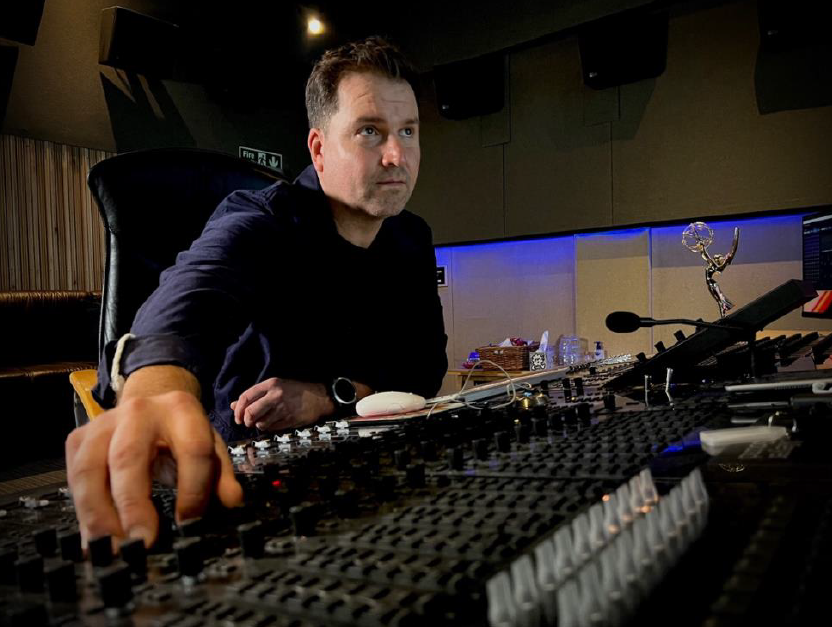
Your Expert Guide to Film and TV Music Editing


In the nuanced world of post-production, a project’s emotional rhythm is carefully shaped in the final edit. Emmy-winning audio professional and Emmy-nominated music editor, Dan Brown bridges the gap between the composer’s studio and the film editor’s suite. Rather than writing the notes, Dan collaborates with the composer to cut, track, and adapt their score so every cue lands perfectly against the definitive video edit. We sat down with Dan to explore how he handles scores, manages complex soundscapes for premium television, and balances technical skill with narrative impact.
Q: For the producers and executives reading, how do you explain what a music editor does in layperson’s terms?
Dan Brown: Predominantly, it’s to serve as a conduit between production/the director and the composer/music department. The purpose of this is to solve musical conundrums, which may occur between the composer and production, and also to act as an extra pair of hands for the composers, who are often pushed for time in very tight production turnarounds.
Q: Why can’t a traditional film editor simply do the same job, and why is being musically trained so critical to protecting the composer’s score?
Dan Brown: Some film editors do a great job with cutting together temp music for a score, but the demands of the production line rarely allow for them to be involved with the music beyond that; it requires a specialist with a nuanced understanding of extreme subtleties within the music-to-picture world, and fast sound editing and sculpting capabilities. Formal music training is not a necessity, but a keen ear, deep musical understanding and an ability to translate the creative implications between the musical and non-musical worlds are essential.
Q: How can bringing on a skilled music editor actually save a production money late in post-production when dealing with picture re-cuts and licensing challenges?
Dan Brown: A skilled Music Editor can rework a composer’s music long after the last note is played, whether it be adapting a score to last-minute picture changes (!) or any reversions needed for international broadcasts and spin-offs. For a composer to re-do this work, it’s impractical: it would be extremely time-consuming and expensive, but with good source material, this part of the job is a great pleasure for an ME and can be hugely rewarding creatively.
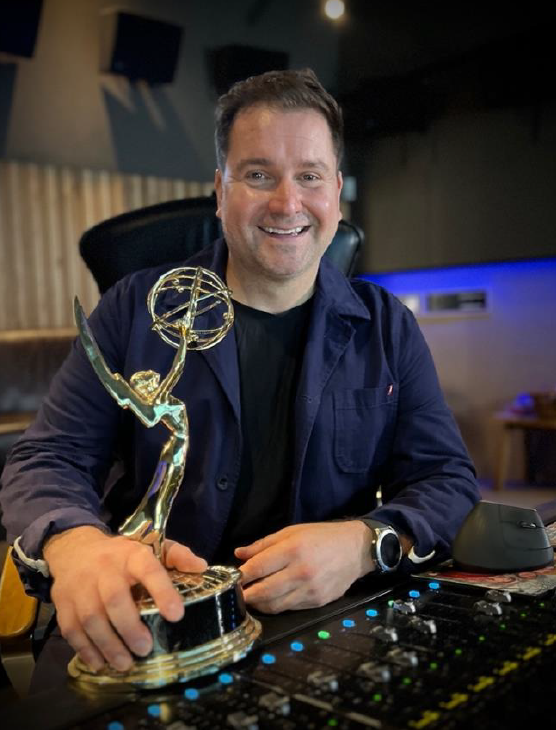
Q: At what exact stage in production should a producer ideally bring a music editor onto the project to maximise the value you bring to the composer and the timeline?
Dan Brown: Ideally, from the very beginning of the guide score, particularly if some of the composer’s music is available to start working into the early cuts of the picture. This would be a luxury scenario, but in reality, the editor often has a selection of go-to commercial music they like to use on early cuts, so the next best time to start would be as soon as the first spotting session is booked. This can either be done over a longer time for a few days a week, or a shorter, more intensive period, as the budget allows.
Q: What does it mean to be a music editor in the film and TV industry today, and how do you define your role within the broader post-production puzzle?
Dan Brown: It’s exciting and rewarding! These days, the need for a music editor might be greater than ever, due to the explosion of the multi-episodic series and the rise of the streaming companies. The requirement for more score music seems to be growing out of kilter with music budget increases, so working with the composer to get their material to go further can be very helpful. It’s great to feel useful to the team! I think the music editor is a bit like Harvey Keitel’s character in Pulp Fiction: we find ways of cleaning up the blood and making (musical) problems disappear…
Q: Can you walk us through the technical workflow with the Composer before the final score is delivered?
Dan Brown: It’s never exactly the same twice. But in general, once I’m on board with the composer, I have access to a variety of instrumental components they have created for the score (known as stems) which, when all played together, make up a cue. I’m able to use these components to create my own vignettes, which can then generate their own offshoots and help the composer get more coverage, without diluting their sound. These reworkings, once approved by the composer, are then fed straight into the edit and hopefully end up as cues in the final mix. Ideally, I would then attend the final mix in the dubbing theatre, from start to finish, and work to solve any conundrums which arise, with the unswerving priority of making sure the score does the right job for both composer and director.
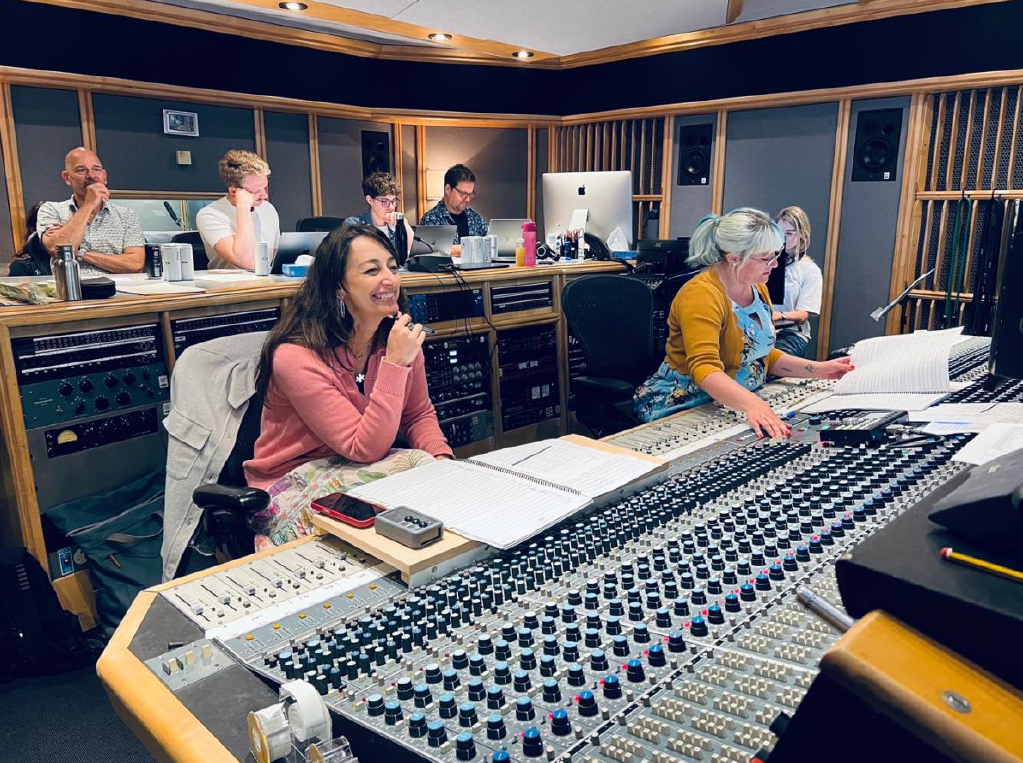
Q: What was it like serving as a mixer for Tom Hanks’ The Americas? How do you technically manage the audio hierarchy when blending dialogue, heavy sound effects, and a massive natural history score?
Dan Brown: It was a great honour to do the pre-mixes for the real star of the show: Graham Wild (sorry Tom!) who landed the final mix, drawing together my pre-mix, the orchestra and the narration in a magical way only he knows how. Thanks, Graham!
Q: On series like The Tourist and The Buccaneers, how do you handle tracking and adjusting musical pacing when a scene undergoes significant re-editing late in the post-production cycle?
Dan Brown: Every tailor has their favourite pair of scissors… and mine is called Pro Tools! Seriously, there’s nothing it can’t do – it can reverse you out of a narrow, blind alley even under heavy fire. The slicing, dicing, time-stretching, blending, mending capabilities of this software mean that there’s always a way of fixing anything if you try hard enough.
Q: What is the most challenging technical fix you’ve ever had to pull off – such as hiding a massive jump cut or manipulating a track’s time-stretch to save an awkward transition?
Dan Brown: I once faced a particularly bizarre brief: take a famous piece of music, cut it down, and somehow make it fit footage of a dancer who was dancing to a different piece of music entirely. Every turn, leap and landing had to appear intentional. It was a bit like forcing together two jigsaw puzzles from different boxes. I don’t think anyone has ever noticed…
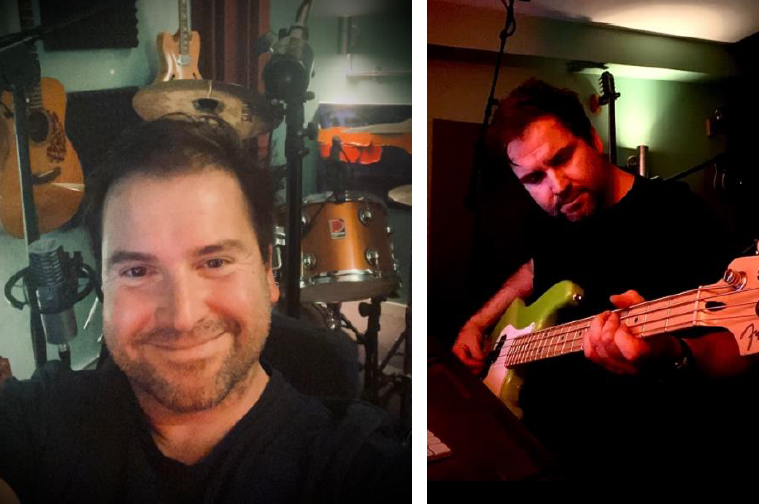
Q: What advice would you give to aspiring music editors starting out in these AI times, particularly regarding mastering file delivery pipelines and DAW (Pro Tools, Logic or Cubase…) organisation?
Dan Brown: Music editing is a very communicative role, and even with the rise of AI I can’t imagine that people will want to make films or programmes without human interaction. There are some really useful AI audio plug-ins that work within Pro Tools (see my fangirling above) but I think that they are just that: brilliant tools. If anything, I think the nuanced intricacies of this job demand a human to be at the helm (at least for the moment). There’s no singular way into this world; I came through the rock ‘n’ roll route, but another music editor I know used to be an accountant! Being able to communicate and connect with a wide range of character types and skill sets is key.
Q: Looking back at your Emmy-nominated work on projects like Africa or your work on Planet Earth III, what are the biggest audio milestones you are most proud of?
Dan Brown: One of my proudest moments happened very recently. The job: hired at the eleventh hour to work with a composer to create 50 minutes of music for a 65-minute film. I was editing things into place as I was hearing them for the first time, whilst the composer topped up the folders with a carefully curated selection of stems. The result: no notes from the director or the exec for the first time ever! We watched it back and the score worked so ridiculously well, we must have entered some kind of flow state for it to be that effective against all the odds. What a buzz!
Q: From a music editor’s perspective, what essential workflow advice should producers follow to make the post-production music schedule run smoothly?
Dan Brown: It sounds like I’m trying to talk myself into as much work as possible here, but in all honesty, the further upstream you can afford to bring a music editor on board, the easier the whole experience will be for the rest of the ride, for all involved. All too frequently, we are called upon to clear up blood that need not have been spilt!
Q: You mention you came from a Rock n’ Roll route, do you think being a performer and songwriter has helped with music editing in general?
Dan Brown: I think it definitely has. When making any adjustments to score music or temp, it’s almost impossible to avoid some level of creative performance, and sometimes (when you really get it just right), the musical reward receptors seem to dance about in a similar way as they might during a memorable stage or studio moment. I’d also say that working on a score with a composer is sometimes akin to making a record in the studio. The camaraderie within the music team can be very special too, much like being in a band.
One notable difference though: The schedule – whilst working with Massive Attack for example, the delivery schedule was secondary to the completion of the songs to the artist’s satisfaction, and that was non-negotiable. On a score, the picture leads, and the delivery schedule often flexes, so in order for everything to sync up for the final delivery, the musical cooking process often needs to be short (and sometimes very hot) to keep all the clients happy.
Many thanks to Dan Brown from DNA Music Ltd for contributing to this guide for The Knowledge.

Share this Article