


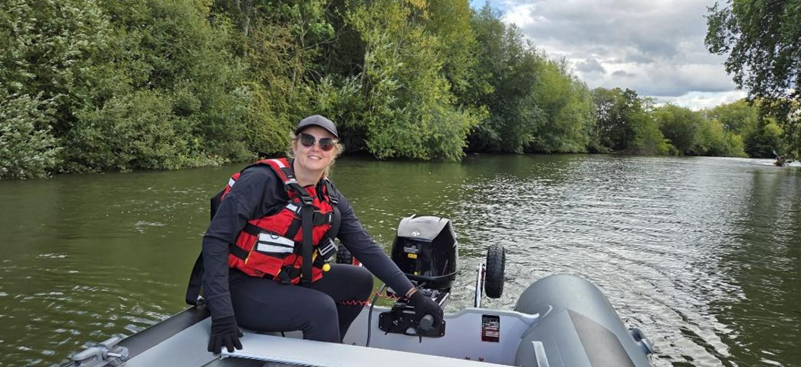
Your Expert Guide to Medical and Water Safety Cover on Productions
When it comes to safety cover on set it is important to remember that, whilst this cover may be deemed by some merely as a tick box exercise, safety professionals are there for what they may have to do – and the importance of this role cannot be overstated.
In this guide, Craig McIntosh from TV Medics and Production Water Safety takes us through the key considerations when hiring on-set medical providers.
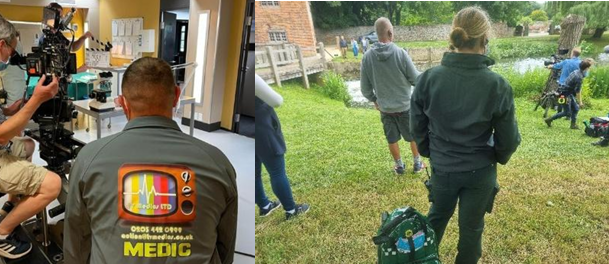
Experience
When choosing a medical provider this needs to be an established business with credits to their name. The private medical industry has seen an increase in the amount of small business cropping up recently run by individuals who see the TV and Film industry as another means of work with little industry-specific experience. It is also important to understand the pre-hospital qualifications to see what is suitable and also the equipment and scope of practice each qualification allows.
Insurance and qualifications
When choosing a medical provider, it is important to make sure that their insurance covers film and TV work and they hold medical malpractice cover for the correct skill level they perform, including medications and medical interventions. Just because somebody says they have insurance does not always mean it is the right insurance or that it covers them for work within the industry. Using First Option approved suppliers can help with this, because they have to supply insurance documents. However, if at all unsure then do ask your prospective supplier for proof.
Governance
It’s also important to make sure the right governance is in place for procedures such as giving medication. Although Paracetamol and Ibuprofen can be bought over the counter as general sales list medication (GSL), there has to be governance in place for administering this type of medication in a professional capacity. The company should have a patient group directive (PGD) signed by a doctor or Pharmacist, which authorises the administration of any medications they hold.
Company or individual?
Whilst you may favour an individual, they may not have the governance in place that a company should have, and also if they are off for any reason there may not be replacement cover. A company can provide different skill levels of clinician and also cover multiple units at one time. A long-term set that we cover sometimes has 2 units, water safety, construction and strike at the same time; as a company we can provide that many staff at one time, whereas an individual may struggle.
Environmental Impacts and Albert Compliance
We were the first company to be registered as an Albert supplier in the medical industry. There are now several other companies who have followed suit.
Vetting
This is especially important. Companies should vet all staff and have a rigorous application process including an interview, reference checks, and DBS checks. Quite often we see in the industry Facebook posts asking for last minute cover for staff on film and tv sets. No interview, no reference checks or DBS checks. Avoid at all costs!
Patient Records
As a company we have an online GDPR compliant patient record system and are registered with the information commissioner’s office (ICO). Our records are securely retained for a period of 8 years; every patient contact should be recorded, paracetamol or plaster. It is important that your medical provider has the same systems in place.
What is a Medic?
The term “Medic” has long been used by the industry as a generic term and the assumption that everyone in green uniform is a Paramedic. This isn’t the case. In the pre-hospital world, we use the term “Medic” to signify a registered healthcare professional. In the hospital world “Medics” are Doctors.
Do I always need a Paramedic?
The short answer is no. Paramedics, whilst well skilled with extra qualifications, are not always necessary on a set. Generally, more high-risk stunt work such as body burns and car crash work would require a Paramedic on site. This is due to the level of analgesic pain relief and airway management a Paramedic can do as part of their scope of practice. Paramedics can be checked on the HCPC register – which is a public record – to make sure that they are still registered as a healthcare professional. It is illegal for a person to say they are a Paramedic when they aren’t qualified and registered with the HCPC.
FREC 3 (First Response Emergency Care Level 3) / First Responder. This qualification is an entry level in the prehospital qualifications and can give first aid and trauma care as well as immobilisation in spinal injury. A FREC 3 can also use oxygen in an emergency and perform basic life support in a cardiac arrest situation. For low-risk productions a FREC 3 may be suitable. However, your insurance or health and safety advisor may insist on a higher level. As a rule, we don’t provide FREC 3 medical staff to production due to the complexities that may arise from emergent situations.
Drug scope – General Sales medications such as Paracetamol, Ibuprofen, Antihistamines
FREC 4 (First Response Emergency Care Level 4 ) / Emergency Care Assistant. Allows for unsupervised working and can deal with more detailed assessment of more chronic conditions or acute conditions, such as abdominal pain and respiratory problems. They can also administer oxygen in a healthcare setting and emergency setting and use more advanced airway management in a cardiac arrest setting.
Drug scope as with FREC 3 but can also use Analgesic gas such as Entonox.
Ambulance Technician / Associate Ambulance Practitioner (AAP). As per FREC 4 however can perform and interpret a 12 lead ECG, manage acute onsets such as Asthma, Anaphylaxis, Angina, Heart Attack, Diabetic emergency, COPD.
Drug scope is much bigger and, with appropriate governance, the use of more advanced analgesia such as Penthrox, as well as injecting lifesaving medications intramuscular.
Paramedic. Can cannulate, give fluids, perform autonomous assessment and use drugs such as morphine
and diazepam, as well as all the skills above.
Nurses. With Prehospital experience can be a valuable asset to your set. However, the importance here is
that they have prehospital experience and are comfortable working in the environment.
Prehospital medicine and hospital medicine are 2 quite different areas, and it is important that you are getting the correctly qualified and experienced staff.
Conclusion
When choosing a medical provider check the following:
– What is their experience?
– Are they appropriately insured?
– Do they have clinical Governance to provide medication?
– How do they record patient details?
– Are they appropriately qualified?
Water safety around production
As a provider of water safety services through www.productionwatersafety.co.uk, we are
experienced in providing this support on-set.
So, what is water safety?
As with medical, selecting an appropriate water safety provider is vital – having a member of the AD team with a throw line is not appropriate water safety cover.
Firstly, the use of a throw line is not as straightforward as it seems. Secondly water safety cover, as with medical, should be a dedicated role. As with medical it is important that your provider has the appropriate experience and qualifications to perform their role.
Water safety isn’t just about filming on the water but also near the water. As an employer, a Film or TV set has a duty of care to reduce risk to all employees and contractors when working on or near the water and that may mean that water safety cover is necessary.
What is an appropriate qualification?
There is a general misconception that a lifeguard is an appropriate qualification when it comes to filming on, in, or near water. However, the Royal lifesaving society (RLSS) who accredit lifeguard qualifications state that:
Those working near still, non tidal water providing safety cover during structured managed activity are minimum DEFRA mod 1.
Those working near, on & in INLAND waterways providing safety cover during structured managed activity up to wading depth water, are minimum DEFRA mod 2.
For those working near, on & in INLAND waterways providing safety cover during structured managed activity in water deeper than wading depth
or
For those working near, on & in COASTAL waterways providing safety cover during structured managed activity are minimum DEFRA mod 3.
All the staff we provide are DEFRA mod 3 Swiftwater rescue technicians. The emphasis on this is that when working on or near water there should be a water rescue professional for safety.
What is a Swift Water Rescue Technician?
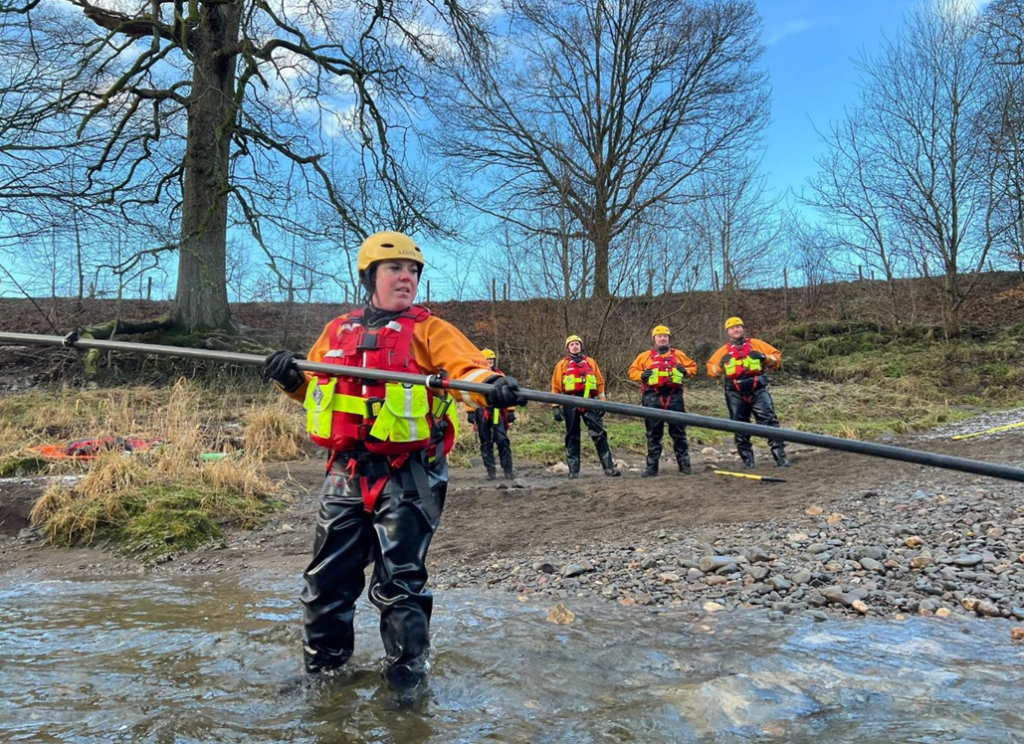
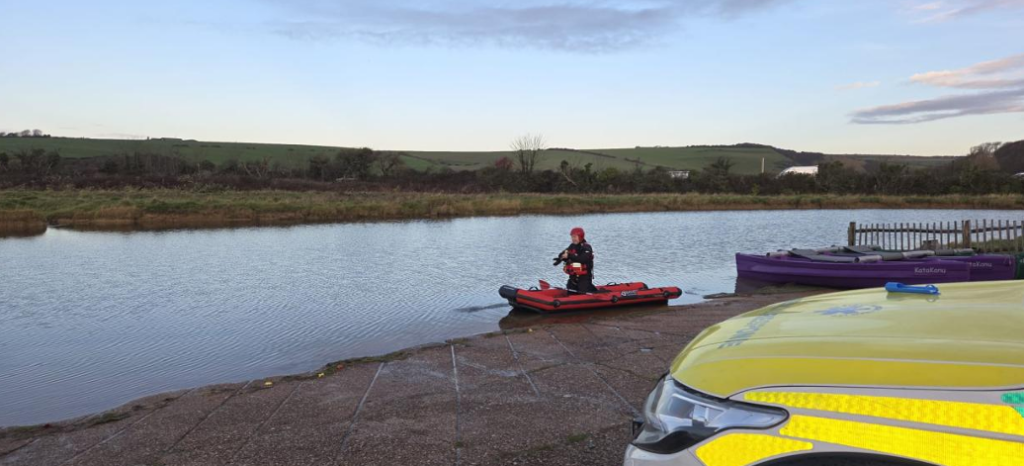
An SRT is not only trained in water rescue but also in hydrology and geography of water bodies and rivers. There are many invisible hazards when it comes to water, and these must be considered when filming things such as sluices, whirlpools, weirs and fast-moving water, all of which an SRT is trained to handle. Although they will carry a throw line, that is often not the appropriate or best means of rescue. We carry reach poles, ladders, throw lines, canyon bags and more. We also provide lifejacket hire for your crew so that everyone is safe.
What cover do I need?
Each production has its own needs based on the activity that is being performed. It may be 1
banksperson or a team including rafts and boats. The best place to start is a discussion around what will be happening on the day. A recce may be required prior and on the day, as rivers can change over time based on rainfall, weir openings and appearance of strainers and obstructions.
Where can I get further advice?
Please visit our website www.productionwatersafety.co.uk for additional information and to get in touch with us.
Many thanks to Craig McIntosh from TV Medics and Production Water Safety for compiling this guide for The Knowledge.
Share this Article